
It is spring cleaning season in CT and I am starting with my sewing room. Which honestly, looks like it hasn’t seen a swiffer in a decade. The cleaning people aren’t allowed in other then to change the garbage, and if I put things away, how would I find them?
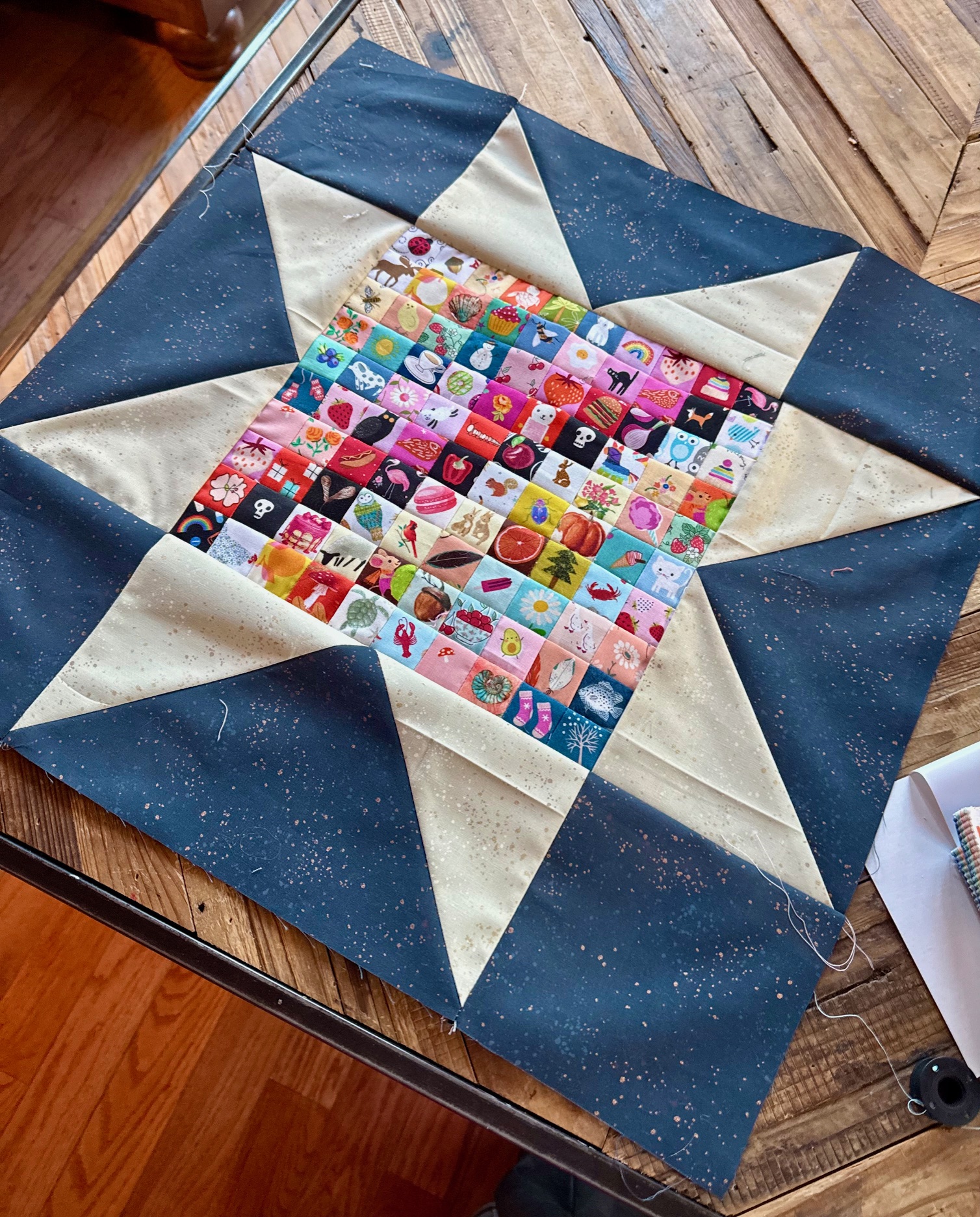
I have been obsessed with 1.5″ squares lately. More on that in a week or so when I share some free patterns. While I have been sewing them, I realized I was using the wrong rotary blade. I mean seriously, when the blade is bigger than the fabric it isn’t great. So I went back to basics, cleaned up the sewing room, and got rid of all the old, ugly, or broken rotary cutters. And then I started thinking about how I use each one (when I have time to think!)

The purpose of this post is not to advocate for one brand over another. Or one style over another. Use the brand and style that works for you and is comfortable for a lot of cutting. But, also, use the right size (18mm, 28mm, 45mm, 60m) for the job. Here are my thoughts.
60mm – For Big Jobs!
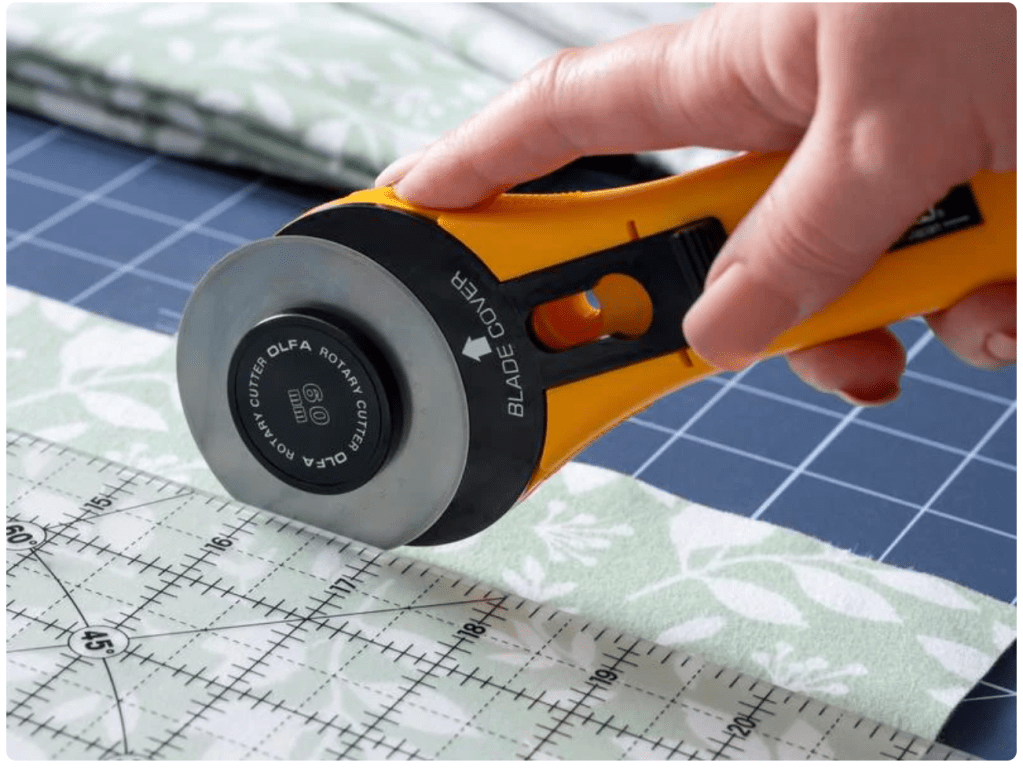
The 60mm rotary cutter is the largest rotary cutter on the market today. The Olfa version can cut up to 12 layers of cotton quilting fabric at one time, and trust me when I tell you, it works. I usually top out at around 10 layers to avoid fabric shifting.
The 60mm rotary cutter is also strong enough for other fabrics – I’ve used mine with leather, vinyl, denim, and cork.
The best thing about the larger blade is that the larger circumference has the blade last longer as less rotations get the job done. This is the rotary cutter that I use most. Rarely am I cutting only one layer of fabric, and the only time I don’t use this one is if I am working in smaller pieces. Why do you need this in your sewing box? For times you want to cut a lot quickly, for other fabrications, and it is also great for squaring your quilt.
45mm – Old Reliable!
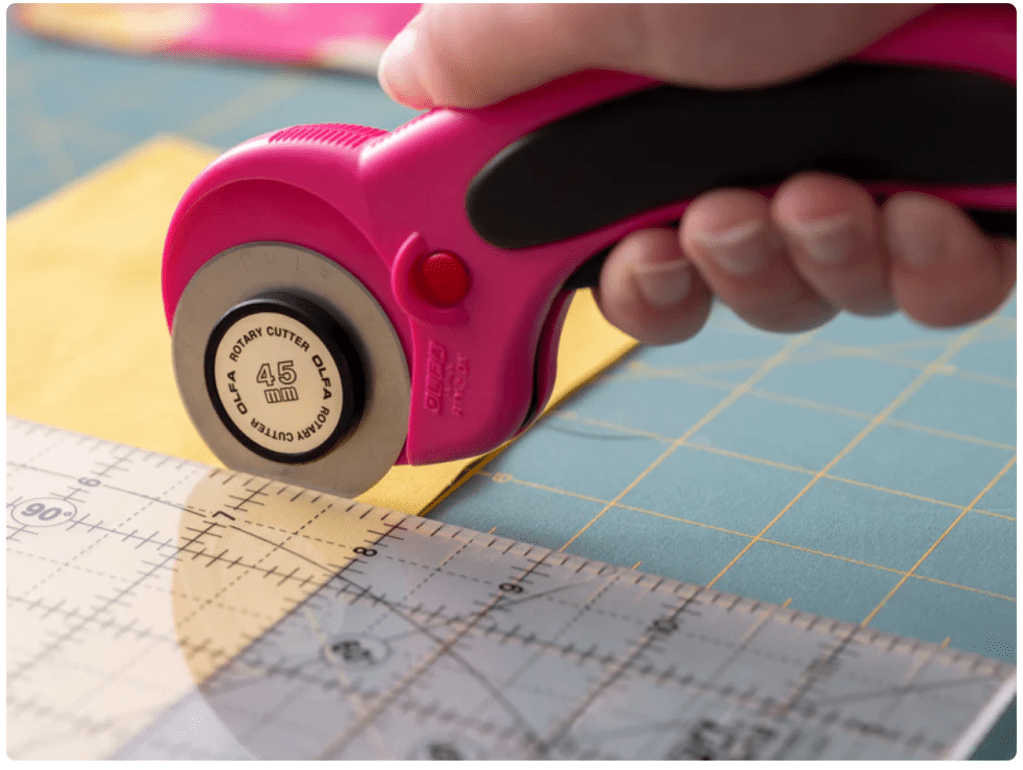
The 45mm rotary blade is like a cuddly blanket. It is the all purpose tool you can always count on. The Olfa models generally cut through 4-5 layers of cotton with ease. It also works with Stripology rulers really well. And, replacement blades are super easy to find at most quilt shops and craft stores. I use this one when I’m cutting a single layer or two of fabric, or when I’m working with smaller pieces.
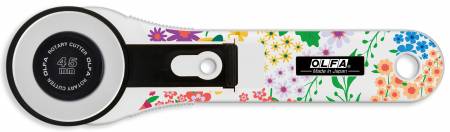
I also use this rotary cutter when cutting out apparel patterns. Usually in this case I’m not using a ruler, so the smaller size, as compared to the 60mm, is easier to manage with less risk of losing control. Why is this a great one to have? It’s just right for most tasks with a great blend of power and control. Plus, look how pretty the new floral printed handle 45mm rotary cutter is!
28mm – Great for Small Spaces!

Sometimes you need a little more control, especially on things you are doing one at a time. I use a 28mm rotary cutter for three primary tasks. First, for trimming components. Say I am trimming flying geese units that I have purposely made a little larger. I can fly through the job with this cutter and feel less likely to lose a finger. It’s light, it’s fast, and given I am trimming blocks or components one at a time, I don’t need a larger blade. The second reason I use this blade is for piecing curves. You can get a lot more precision with this size blade, but it isn’t so small that you feel like you aren’t making progress. And lastly, I use this size for fussy cutting, primarily when I am trying to get more than one piece out of a scrap. The smaller blade allows me to not waste fabric by cutting too far. I rarely cut more than one piece at a time with this blade, but Olfa says you can do two layers of cotton. You want this rotary cutter because this size is a necessity for precision as opposed to power.
This blade can also be super helpful for apparel sewers working with fine fabrics. Working with fine or slippery fabrics is challenging enough – the smaller blade helps keep your cutting manageable!
18mm – the Baby Blade That Meets a Need!
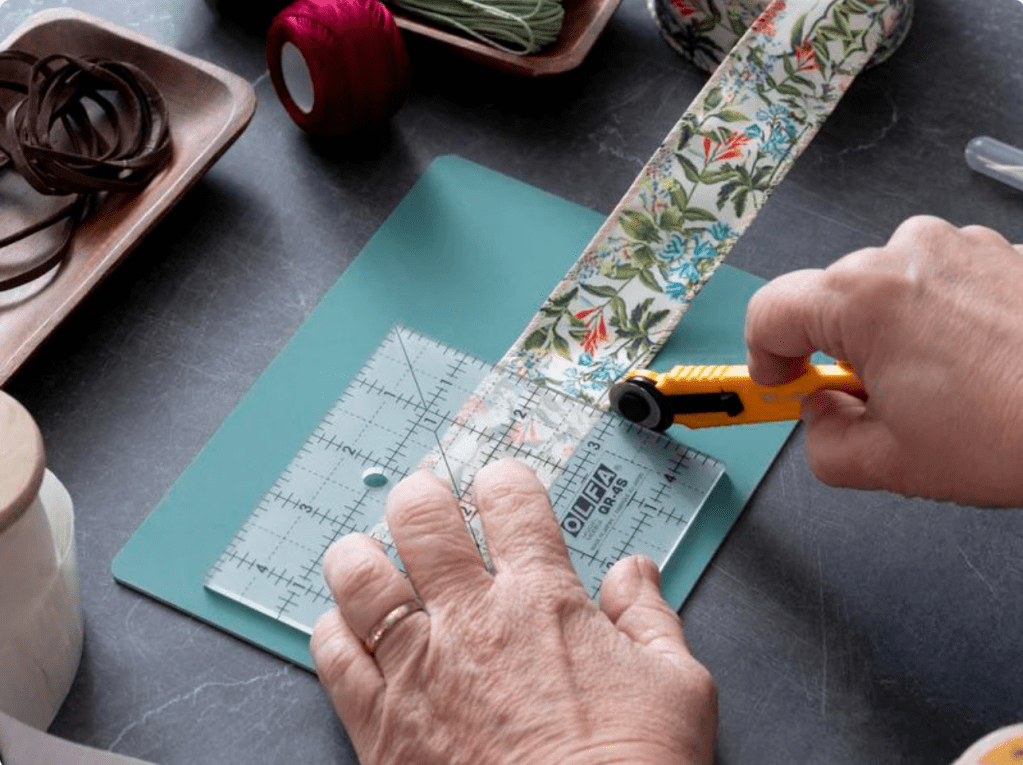
For me, the 18mm blade is for tiny pieces and detailed work. I am working on an Elizabeth Hartman block that has pieces as small as 3/4″ square. To cut something that small, I use the smallest blade I can find. Also, I mentioned my obsession with 1.5″ squares. When I am fussy cutting them, I go with this blade. It allows me to be more detailed, and creates less waste.
A nice feature on the Olfa 18mm cutter is finger grooves to help you maintain control when working with smaller pieces and a smaller blade. I wouldn’t even try two layers of fabric, but when you are working on something so detailed that you need this blade, one at a time is the way to go.
Do you need this rotary cutter? Need it? Probably not. Is it helpful? Absolutely. Am I so glad I have it when I need it? You betcha.
Again, while I use Olfa cutters and blades, you should find what works for you. We carry Martelli cutters, Kaffe Fassett cutters, and occasionally Fiskars or Creative Grids. And for the next few days – April 2, 2025 through April 6, 2025 – all rotary cutters that are in stock are 10% off to help you stock up and clean up for spring!
 Welcome to the Cotton Candy Fabrics Blog
Hi. Thanks for the thorough review. I am looking at the 18mm olfa. Does it work well with that little square ruler you are using? Do you know how many mm it is from the center to the edge of the blade? Been scouring the web looking for this info. I’m reading mixed reviews about using it with a ruler or template. Please let me know. It looks perfect for my smaller jobs and curved pieces, but I need to be able to use the guide. Thanks so much!
I have used the 18mm rotary cutter with all different rulers. But since you are asking specifically, I will try again in the morning to confirm. 🙂